what kind of flowers do deer not like to eat?
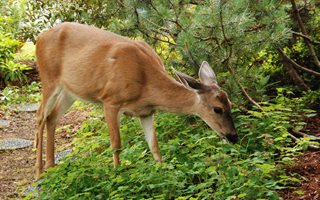
Deer dear to graze on many types of groundcovers, especially when new, tender growth emerges in the spring.
The ornamental plants and shrubs in your garden should be a feast for the optics, not a banquet for the local deer population. Although information technology's impossible to make a lawn completely deer-proof, yous can make full it with plants deer detest and minimize deer impairment. For a natural look, this deer-resistant wildflower mix is great, otherwise bank check out the suggestions beneath.
"You tin can still have a lush, thriving garden by making smart choices. Many stunning plants are unpalatable to deer because of their poisonous compounds, fuzzy or effluvious leaves, and tough, spiny, or bristly textures," says Ruth Rogers Clausen, author of 50 Beautiful Deer-Resistant Plants. We've included some of Clausen's smart choices, along with a few top picks of our own, in this listing of deer-resistant plants.
ON THIS Page:
- DEER-RESISTANT FLOWERS (ANNUALS)
- DEER-RESISTANT SHRUBS
- DEER-RESISTANT PERENNIALS
- DEER-RESISTANT GROUNDCOVERS
- PLANTS TO AVOID
- DEER-PROOFING TIPS
- ONLINE LEARNING
DEER-RESISTANT FLOWERS (ANNUALS)
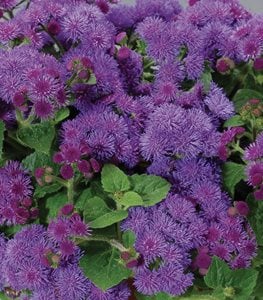
Creative person® Blue floss bloom. Photo by: Proven Winners.
FLOSS Flower
Clusters of lavender-bluish flowers and rough-textured leaf go along deer at bay. Available in shades of blueish, pink, purple, and white. For a floss bloom that doesn't require deadheading and is better suited for hot climates, try Artist® Blue (pictured).
Zones: 10-xi, grown equally an annual elsewhere
Exposure: Full sun to fractional shade
Blossom fourth dimension: Tardily spring through fall
Pinnacle/spread: 4 to 36 inches tall, vi to 18 inches broad
Learn more about growing floss blossom.
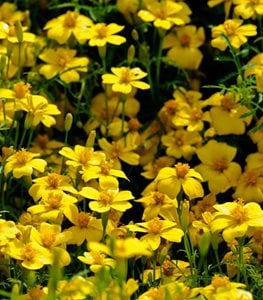
Tagetes tenufolia 'Lemon Gem'. Photo by: RM Floral / Alamy Stock Photo.
SIGNET MARIGOLD
All varieties of marigolds are a turnoff for deer because of their potent, pungent aroma. Even so, signet marigolds (pictured) have a lighter citrusy smell and flavor, making them popular for culinary use.
Zones: 9-x, grown as an annual elsewhere
Exposure: Total sun
Bloom fourth dimension: Late jump until frost
Pinnacle/spread: Varies widely, 6 inches to 4 feet alpine, 6 inches to 2 anxiety wide
Learn more virtually growing marigolds.
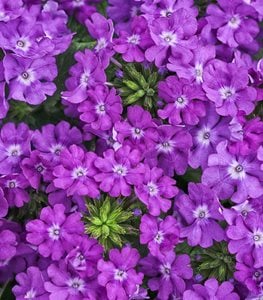
Superbena® Violet Ice. Photo by: Proven Winners.
VERBENA
Verbenas bloom from leap until frost if trimmed dorsum in midsummer. The small flower clusters come in a wide range of colors, including white, pinkish, blue, lavander, purple, dark ruby-red, yellow and bicolor.
Zones: viii-11, grown as an annual elsewhere
Exposure: Full sun
Bloom time: May through October
Tiptop/spread: Varies, from low-growing to upright.
Learn more about growing verbena.
Buy verbena plants from Proven Winners
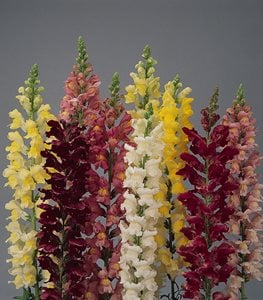
Rocket mix snapdragon. Photo courtesy Kleft Seed.
SNAPDRAGON
Dramatic spikes of flowers make snapdragons a stunning addition to a deer-resistant garden. Snapdragons bloom nigh profusely in the libation weather of spring and autumn, and come in a variety of cultivars.
Zones: 9-10, grown every bit an annual elsewhere
Exposure: Total lord's day
Bloom fourth dimension: Mid-bound to frost
Superlative/spread: half-dozen to 30 inches tall, ten to 18 inches broad
DEER-RESISTANT SHRUBS
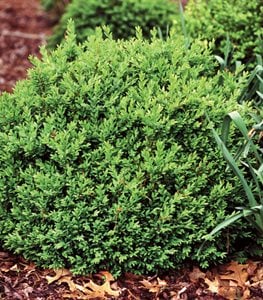
North Star® boxwood. Photo by: Proven Winners.
BOXWOOD
Amidst the most versatile evergreens for a deer-resistant garden. They come in numerous shapes and sizes and take well to pruning. Deer seem to shun them because of their stiff scent.
Zones: 4-8
Exposure: Fractional or dappled shade, protect from harsh mid-day sun
Summit/Spread: Varies greatly, from one to 20 feet tall, 2 to viii feet wide
Learn more than about growing boxwood plants.
Purchase from Proven Winners
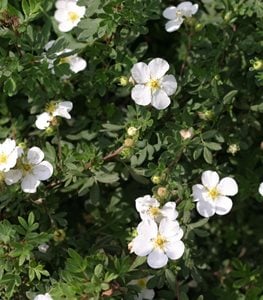
Happy Face up® potentilla. Photo by Proven Winners.
CINQUEFOIL
I of the best flowering shrubs for season-long color. Deer tend to find the finely textured blue-dark-green foliage unappealing. Popular cultivars include Happy Face® (pictured).
Zones: 2-viii
Exposure: Total sunday to fractional shade
Flower time: June through September
Height/Spread: Varies, from 3 inches to 4 feet tall, 6 inches to 5 feet wide
Acquire more than about growing cinquefoil plants.
Buy from Proven Winners
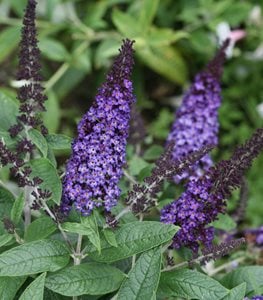
Pugster Blue® butterfly bush. Photo by: Proven Winners.
BUTTERFLY Bush-league
Attract bees and butterflies while you fend off deer. Blossom colors are typically deep purple, pink, or white, although some hybrids have orangish and gold blooms. For smaller gardens, attempt Pugster.
Zones: 5-9
Exposure: Full dominicus
Bloom Time: Summer until frost
Height/Spread: Varies, eighteen inches to 7 feet tall, xviii inches to 5 feet broad
Acquire more about growing butterfly bush.
Buy from Proven Winners
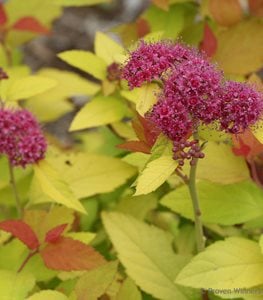
Double Play® Processed Corn® spirea. Photo by Proven Winners.
SPIREA
It's a bit of a mystery why deer avoid spirea. A wide array of sizes are available. An interesting selection is Double Play® Candy Corn® (pictured), with leafage that emerges bright carmine and matures to yellow.
Zones: 3-8
Exposure: Full sun
Bloom time: At that place are spring- and summertime-blooming varieties
Height/Spread: 1 to 8 anxiety tall, up to half-dozen feet broad
Note: Japanese spirea (Spiraea japonica) is invasive in parts of the U.S. and Canada; see where.
Learn more near growing spirea plants.
Purchase from Proven Winners
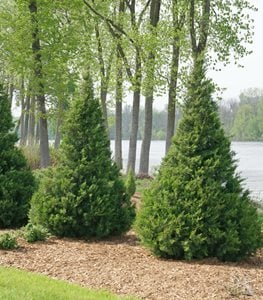
Gin Fizz™ juniper. Photo by Proven Winners.
JUNIPER
Junipers have many dissimilar uses: groundcovers, accent plants, topiaries, and privacy screens. They repel deer because of the volatile oils in their needles, they as well are drought tolerant and have few pest problems.
Zones: 3-7
Exposure: Total dominicus
Height/Spread: Varies greatly, 6 inches to over 100 feet tall, 1 to 25 feet wide
Learn more almost growing junipers.
Purchase from Proven Winners
DEER-RESISTANT PERENNIALS
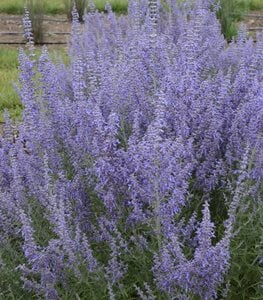
'Denim 'n Lace' Russian sage. Photo by: Proven Winners.
RUSSIAN SAGE
The finely-cut silvery leafage makes it an eye-catching filler plant in a sunny perennial garden. Tiny flowers flower on tall stalks, producing lovely plumes of color. The flowers volition oft last well into October.
Zones: five-9
Exposure: Full sun
Flower Time: Early on summertime to fall
Elevation/Spread: Varies, 2 to 4 feet tall & broad
Learn more about growing Russian sage.
Purchase Russian sage plants from Proven Winners
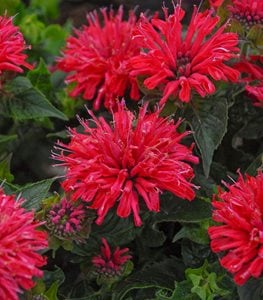
'Pardon My Cerise' bee lotion. Photograph by Proven Winners.
BEE BALM
One of the all-time plants for attracting and supporting pollinators; nevertheless, deer tend to get out it lone because of its pungent fragrance.
Zones: 3-9
Exposure: Full sun to partial shade
Top/Spread: Varies, 1 to 4 feet alpine, 8 inches to 3 feet wide
Learn more than about growing bee lotion.
Buy bee balm plants from Proven Winners
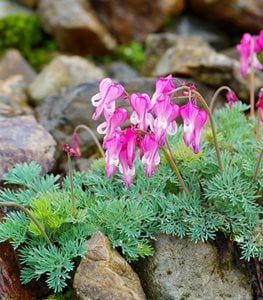
'Stuart Boothman' bleeding heart. Photo by Brawl Horticultural Company.
FRINGED Bleeding Eye
One of the few native woodland plants that deer don't go for. Although a flake less showy than the common haemorrhage heart, the centre-shaped flowers range in color from white to various shades of pink.
Zones: 3-9
Exposure: Total dominicus
Flower Fourth dimension: Late bound to early autumn
Peak/Spread: 1 to 3 feet tall & wide
Larn more almost growing bleeding heart.
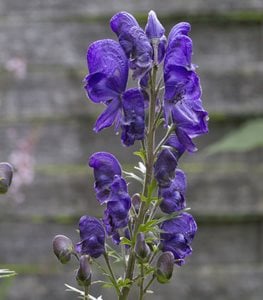
MONKSHOOD
Despite monkshood's notoriety equally a poisonous plant, it has a captivating beauty and provides a welcome display of late-flavour color.
Zones: 3-eight
Exposure: Full sun to fractional shade
Bloom Fourth dimension: Late summer through fall
Height/Spread: 2 to four feet tall, i to ii feet wide
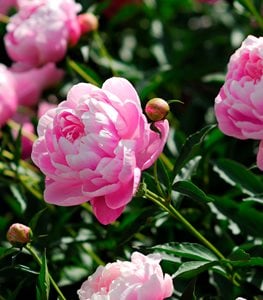
Photo past PaylessImages / 123RF.
PEONY
Prized for their large, fragrant blooms, peonies have many attributes beyond their breathtaking beauty. They are tough, reliable, long-lived, and virtually pest-proof-including deer.
Zones: ii-eight
Exposure: Total sunday to fractional shade, depending on variety
Blossom Fourth dimension: Late leap to early summer, depending on diversity
Top/Spread: Varies, 1 to iii feet alpine & wide for shrub varieties; 4 to seven feet alpine and upwards to v feet wide for tree peonies.
Acquire more virtually growing peonies.
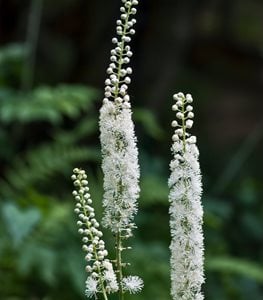
BLACK COHOSH
Too called blackness snakeroot and bugbane, this institute's bottlebrush-shaped flower spikes add drama and involvement to a shade or woodland garden and have an unpleasant odor and bitter gustation that repel deer.
Zones: 4-9
Exposure: Partial to total shade
Flower Time: Summertime
Summit/Spread: 4 to 6 feet tall, 2 to 4 feet broad

'Silvery Grit' dusty miller. Photo past Tim Gainey / Alamy Stock Photo.
DUSTY MILLER
Grown primarily for its attractive silverish-gray leaf, dusty miller has a felt-like coating that deer detect unappetizing.
Zones: seven-10
Exposure: Full sun to fractional shade
Height/Spread: Up to 2 anxiety tall & wide
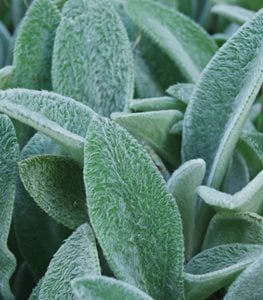
Lamb's Ear. Photograph past Julia Senkevich / Shutterstock.
LAMB'S EAR
The grey-green foliage has a velvety soft, wooly texture which deer don't like. This easy-care plant blooms in summer with spikes of pink to imperial flowers.
Zones: 4-eight
Exposure: Full sunday to partial shade
Height/Spread: 6 to 12 inches tall, 1 to iv feet wide
DEER-RESISTANT GROUNDCOVERS
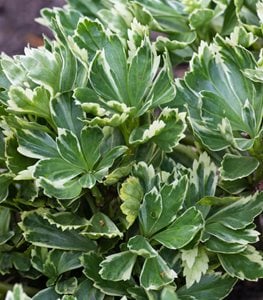
Pachysandra terminalis 'Variegata'. Photograph by John Richmond / Alamy Stock Photograph.
JAPANESE PACHYSANDRA
Primarily grown for its glossy dark-green leaf, which spreads rapidly; an added attraction are spikes of tiny white blooms. 'Variegata' (pictured) has leaves with creamy white edges.
Zones: four-9
Exposure: Partial to full shade
Bloom fourth dimension: Early on spring
Height/Spread: 3 to 4 inches tall, spreads 7 to 8 inches

Athyrium niponicum var. pictum. Photo by Ball Horticultural Company.
JAPANESE PAINTED FERN
Deer ignore most ferns, including this low-growing variety with silver-gray fronds painted with strokes of light-green and mauve. Like other ferns, it spreads freely by creeping rhizomes, just non aggressively.
Zones: 4-9
Exposure: Partial to full shade
Height/Spread: ane to 3 feet alpine, 1 to 2 feet wide
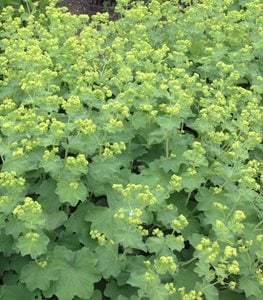
Photo by Brawl Horticultural Company.
LADY'S MANTLE
Clusters of tiny chartreuse flowers held on long stems make lady's mantle a garden favorite. The broad scallop-edged leaves are covered with soft hairs that deer observe objectionable.
Zones: 3-ix
Exposure: Full sunday to partial shade
Bloom fourth dimension: Late spring to early summertime
Superlative/Spread: one to 2 feet tall & wide
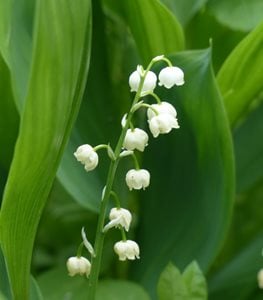
LILY OF THE VALLEY
Dainty bell-shaped flowers perfume the air with a heavenly fragrance in early spring. Brilliant red berries form after flowering, and the lance-shaped leaves concluding all summer, serving as an attractive groundcover.
Zones: 2-7
Exposure: Partial to full shade
Bloom time: Early jump
Elevation: vi to 18 inches tall
Acquire more nigh growing lily of the valley.
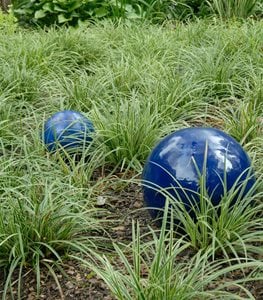
Carex morrowii 'Ice Trip the light fantastic toe'. Photo by: Ball Horticultural Company.
JAPANESE SEDGE
This dodder-forming grasslike plant makes an first-class groundcover for moist, shady areas. Cultivars with variegated green and white foliage are particularly stunning, providing a luminous glow.
Zones: 5-ix
Exposure: Partial to total shade
Height: 12 to 24 inches alpine
PLANTS TO AVOID
| ANNUALS | Coleus, impatiens, pansies and violas, petunias, and zonal geraniums (Pelargonium) |
| SHRUBS | American arborvitae, evergreen rhododendrons and azaleas, hybrid tea rose, yew |
| PERENNIALS | Daylily, goat'southward bristles, cranesbill geranium, hosta, Solomon's seal |
| GROUNDCOVERS | English ivy, lilyturf, wintercreeper |
DEER-PROOFING TIPS
Deer-Resistant Foliage - The iii Fs
See more deer-resistant plants
- Startle them. Deer are often frightened abroad past loud noises and sudden move. Keep them on edge by hanging wind chimes from the branches of copse and shrubs or by placing wind spinners throughout your garden. If that doesn't work, endeavour startling them with a sudden spray of water by installing a motion-activated sprinkler.
- Employ other plants to deter them. Interplant effluvious perennial herbs throughout your garden that have scents that deer hate, such every bit mint, thyme, French tarragon, lavander, chives, sage, and rosemary.
- Repel and fertilize. Deer beloved the tender new leaves and shoots of groundcovers when they beginning emerge in the bound. To eliminate the temptation, treat the area with a strong-smelling deer repellent or something that also doubles as a chemic-free fertilizer, such as blood meal or fish emulsion. "Be conscientious not to overfertilize, which will result in the soft, delicious vegetative growth that deer love. But half the recommended dosage at a given time volition exit the odor but not overstimulate the plants," advises Clausen.
- Found higher. You don't have to avoid growing all the annuals that deer similar to nibble on. Instead, put them in containers on a balcony or front porch or plant them in hanging baskets that are as well loftier for deer to reach. You can also try a deer-resistant wildflower mix.
- Fence information technology in. If all else fails, surround your garden with tall deer fencing or other impenetrable barrier. Learn how to build your own "Critter-Resistant Vegetable Garden".

ONLINE LEARNING:
DESIGNING A DEER-RESISTANT GARDEN
With an accent on design, gardening expert Karen Chapman teaches you her tried-and-true methods for creating beautiful, deer-resistant garden areas. Her tips go well across a deer-resistant plant listing, as she shows you multiple strategies, as well as how to combine them together to get more bang for your deer-resistant buck. Sign me upwardly!
New volume release from Karen Chapman, Deer Resistant Blueprint: Fence-free Gardens That Thrive Despite the Deer - purchase now on Amazon.
RELATED: A Modernistic Garden in Deer Country
Deer-Proof Bulbs
Rabbits - Natural Ways to Protect Your Garden
Source: https://www.gardendesign.com/plants/deer-resistant.html
0 Response to "what kind of flowers do deer not like to eat?"
Post a Comment